Packing Fragile Items: A Complete Guide for a Safe Move in Malaysia
Moving house or office can be stressful, especially when you have fragile belongings that can easily break, crack, scratch, or become damaged during transportation. Glassware, mirrors, electronics, artwork, ceramics, ornaments, kitchen items, and other delicate possessions need more than ordinary boxes and tape.
Proper packing fragile items techniques can significantly reduce the risk of damage during loading, transportation, and unloading. Whether you are moving locally within Kuala Lumpur, relocating from Johor Bahru to Singapore, or transporting household belongings between Malaysian states, careful packing is an important part of a successful move.
Professional movers and packers in Malaysia can provide specialized packing services for delicate and valuable items. However, if you prefer to pack some belongings yourself, understanding the correct techniques can help you protect them throughout the moving process.
What Are Fragile Items?
Fragile items are belongings that can easily break, crack, chip, bend, scratch, or suffer damage from impact and vibration.
Common fragile items include:
- Glassware
- Plates and bowls
- Wine glasses
- Mirrors
- Picture frames
- Ceramics
- Porcelain
- Decorative ornaments
- Lamps
- Electronics
- Televisions
- Computer monitors
- Artwork
- Collectibles
- Vases
- Bottles
- Kitchen appliances
- Musical instruments
Some items may not technically be fragile but still require careful packing because they are expensive or sensitive.
For example, laptops, cameras, hard drives, and other electronics can be damaged by impact, moisture, heat, or static electricity.
Why Is Packing Fragile Items Important?
During a move, your belongings experience multiple stages of handling. Boxes may be lifted, carried, placed inside a moving lorry, transported over roads, unloaded, and carried into your new property.
Even when movers handle boxes carefully, movement and vibration can occur during transportation.
Proper packing provides several benefits.
Prevents Breakage
Adequate cushioning absorbs some of the impact that could otherwise reach the fragile item.
Protects Against Scratches
Wrapping individual items can prevent surfaces from rubbing against each other.
Reduces Movement
Empty space inside a box allows items to move during transportation. Filling gaps helps keep items stable.
Makes Handling Easier
Clearly labeling fragile boxes allows movers to identify them quickly and handle them appropriately.
Protects Valuable Belongings
Specialized packing can provide additional protection for expensive or sentimental possessions.
Essential Materials for Packing Fragile Items
Using the right packing materials is one of the most important parts of fragile-item preparation.
Bubble Wrap
Bubble wrap is commonly used to protect glass, ceramics, electronics, and other delicate objects.
Wrap the item completely and secure the material with packing tape.
Packing Paper
Packing paper is useful for wrapping plates, glasses, bowls, ornaments, and other household items.
Avoid using newspaper directly against light-colored or delicate surfaces because ink can transfer.
Strong Moving Boxes
Use sturdy boxes that can withstand handling during transportation.
Avoid damaged, wet, or weak cartons.
Foam Sheets
Foam provides cushioning and can be useful for delicate electronics, artwork, mirrors, and other sensitive belongings.
Corner Protectors
Corner protection is especially useful for mirrors, frames, furniture, and artwork.
Packing Tape
Use high-quality packing tape to securely close boxes.
Stretch Wrap
Stretch film can provide an additional layer of protection around wrapped items or bundled belongings.
Labels
Clearly mark boxes containing fragile items with labels such as “FRAGILE,” “HANDLE WITH CARE,” or “THIS SIDE UP.”
How to Pack Glassware Safely
Glassware is among the most common fragile household items.
Start by preparing a sturdy box and placing a cushioning layer at the bottom.
Wrap each glass individually with packing paper or bubble wrap. Pay particular attention to the stem and edges of delicate glasses.
Place heavier items toward the bottom and lighter items toward the top.
Fill empty spaces with crumpled packing paper or suitable cushioning material.
Once packed, gently shake the box. If you hear items moving around, add more cushioning.
Don’t leave empty space inside the box.
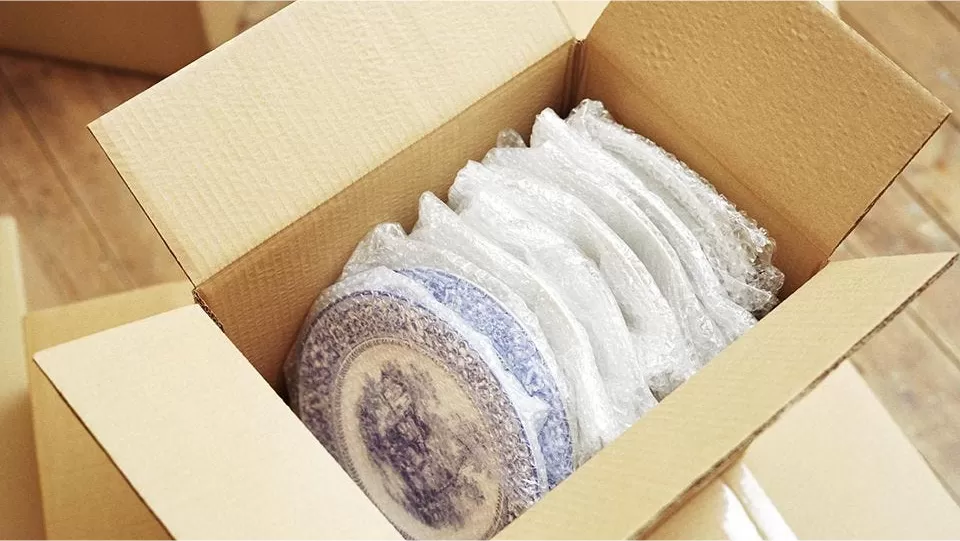
How to Pack Plates and Dishes
Plates should generally be packed vertically rather than stacked flat because vertical positioning can help distribute pressure more effectively.
Wrap each plate individually before placing it inside the box.
Add cushioning between layers where appropriate.
Don’t overload the box. Plates can become extremely heavy when packed together, making the box difficult to carry and increasing the risk of dropping it.
Use several smaller boxes instead of one excessively heavy box.
Packing Mirrors and Picture Frames
Large mirrors and framed artwork require additional care.
Wrap the entire surface with protective material and use corner protectors where possible.
For particularly valuable pieces, consider using custom crating or professional art-packing services.
Clearly label the package as fragile and identify the correct orientation.
Large mirrors should be transported in a way that minimizes pressure on the glass.
Packing Electronics
Electronics require special attention because they can be damaged by physical impact and moisture.
If you still have the original packaging, it is often the best option because the packaging was designed specifically for that device.
For electronics without original boxes:
- Turn off and disconnect the equipment.
- Remove detachable accessories.
- Wrap the device with suitable protective material.
- Place cushioning around all sides.
- Use a strong box.
- Fill empty spaces.
- Label the box appropriately.
For computers and other devices containing important data, create a backup before moving.
Packing a Television
Televisions should ideally be packed in their original boxes.
If the original packaging is unavailable, use suitable protective material around the screen and edges.
Avoid placing heavy objects on top of the television box.
For large televisions, professional movers may have specialized packing solutions designed for screens.
Packing Ceramics and Porcelain
Ceramic and porcelain items can crack or shatter under impact.
Wrap each item individually.
Use multiple layers of cushioning for particularly delicate pieces.
For valuable collectibles, consider individual boxes or specialized protective packaging rather than putting multiple valuable pieces into a single large carton.
Packing Artwork
Artwork can require specialized packing depending on its size, material, and value.
Paintings and prints should be protected from:
- Scratches
- Moisture
- Dust
- Pressure
- Impact
- Excessive movement
For valuable artwork, professional packing and crating may be the safest option.
How to Pack Fragile Items for Long-Distance Moving
Long-distance transportation requires additional preparation because belongings may spend several hours or days in transit.
For interstate moves in Malaysia, consider:
- Strong outer boxes
- Additional cushioning
- Individual wrapping
- Proper sealing
- Moisture protection
- Clear labeling
- Secure loading
The longer the journey, the more important it becomes to prevent movement inside the box.
Fragile Packing for Malaysia’s Weather
Malaysia’s tropical climate means humidity and heavy rain can sometimes create additional challenges during moving.
Moisture-sensitive belongings should be protected appropriately.
Electronics, documents, artwork, wooden items, and other moisture-sensitive possessions may require additional protective wrapping.
When moving during rainy weather, professional movers should take precautions during loading and unloading to minimize exposure to rain.
Don’t Overpack Fragile Boxes
One common mistake is trying to fit too many fragile items into a single box.
Overpacking can make the box extremely heavy and place pressure on the items inside.
Instead:
- Use appropriately sized boxes.
- Keep heavier items toward the bottom.
- Add cushioning.
- Separate delicate objects.
- Avoid excessive weight.
- Seal the box securely.
Remember that a box should be easy enough for movers to handle safely.
Don’t Leave Empty Space
Empty space is one of the biggest problems when packing fragile belongings.
During transportation, objects can shift inside a box.
This creates opportunities for items to collide with each other or the walls of the carton.
Fill gaps with suitable cushioning material.
After closing the box, gently move it. If you can feel or hear the contents moving, open the box and add more protection.
Label Fragile Boxes Correctly
Proper labeling helps movers identify boxes requiring additional care.
Useful labels include:
FRAGILE
HANDLE WITH CARE
GLASS
THIS SIDE UP
DO NOT STACK
However, labels should not replace proper packing. A fragile box still needs sufficient cushioning and secure packaging.
Professional Fragile Packing Services in Malaysia
If you have a large number of delicate belongings, professional packing services can save considerable time and reduce the risk of damage.
Professional packers can assess your belongings and determine the appropriate materials and packing techniques.
They may provide services for:
- Household fragile items
- Office equipment
- Electronics
- Artwork
- Antiques
- Glassware
- Mirrors
- Kitchenware
- Decorative items
- Business equipment
A professional packing team can also organize boxes systematically, making unpacking easier at your new property.
Packing Fragile Items for a House Move
Before moving day, create a list of fragile belongings.
Separate them into categories such as:
- Kitchenware
- Electronics
- Decorative items
- Glass
- Artwork
- Personal valuables
Pack each category carefully and label the boxes.
Keep extremely valuable or irreplaceable items separate when possible.
Important documents, jewelry, cash, and other highly valuable personal belongings may be better transported personally rather than placed inside a standard moving shipment.
Fragile Packing for Condo Moves
Condo moving presents additional challenges.
You may need to coordinate:
- Service elevator access
- Building management approval
- Loading zones
- Parking
- Moving time restrictions
- Narrow corridors
Fragile items should be packed before movers arrive so that they can be transferred efficiently.
For large mirrors, glass tables, and other oversized fragile items, check the dimensions of elevators and doorways beforehand.
Common Mistakes When Packing Fragile Items
Using Weak Boxes
Old or damaged cartons can collapse during handling.
Not Wrapping Items Individually
Items placed directly against each other can scratch or break.
Leaving Empty Spaces
Movement inside the box increases the risk of damage.
Overloading Boxes
Excessively heavy boxes are harder to handle safely.
Using Too Little Cushioning
Thin wrapping may not provide adequate protection.
Forgetting to Label
Movers may not know which boxes contain fragile belongings.
Packing Everything Together
Different items may require different levels of protection.
Should You Pack Fragile Items Yourself or Hire Professionals?
The right choice depends on the number and value of your belongings.
DIY packing can work well when you have a small number of fragile items and enough time to pack them carefully.
Professional packing may be preferable when:
- You have many fragile belongings.
- You are moving long distance.
- You have valuable artwork.
- You have antiques or collectibles.
- You have large glass items.
- You are relocating an office.
- You have limited time.
- You want a more systematic packing process.
A professional mover and packer Malaysia can combine packing, loading, transportation, unloading, and unpacking into one moving service.
Final Checklist for Packing Fragile Items
Before your movers arrive, check the following:
- Fragile belongings identified
- Strong boxes prepared
- Bubble wrap available
- Packing paper available
- Cushioning materials prepared
- Items individually wrapped
- Empty spaces filled
- Boxes properly sealed
- Fragile labels added
- Heavy boxes avoided
- Valuable items separately identified
- Building moving requirements checked
- Special handling requirements communicated to movers
Conclusion
Proper packing fragile items is essential for protecting valuable and delicate belongings during a house, apartment, office, or long-distance move in Malaysia. From glassware and ceramics to televisions, artwork, mirrors, electronics, and collectibles, every fragile item requires suitable protection.
The key is to use strong boxes, wrap items individually, provide sufficient cushioning, eliminate empty spaces, avoid overloading, and clearly label fragile packages.
For large-scale relocations or particularly valuable items, professional packing services can provide additional expertise and specialized materials. With careful preparation and the right moving techniques, you can significantly reduce the risk of breakage and make your Malaysian relocation smoother and more organized.
FAQs About Packing Fragile Items
1. What is the best material for packing fragile items?
Bubble wrap, packing paper, foam, and suitable cushioning materials are commonly used. The best material depends on the type and sensitivity of the item.
2. Should glassware be wrapped individually?
Yes. Wrapping glassware individually helps prevent pieces from hitting and scratching each other during transportation.
3. How should I pack plates for moving?
Wrap plates individually and place them carefully in a sturdy box with adequate cushioning. Avoid making the box excessively heavy.
4. Can professional movers pack fragile items?
Yes. Many moving companies in Malaysia offer professional packing services for glassware, electronics, artwork, furniture, and other delicate belongings.
5. How do I protect a television during a move?
The original television packaging is ideal. If unavailable, use appropriate protective material around the screen and edges and place it in a suitably sized box.
6. How do I prevent fragile items from moving inside boxes?
Fill empty spaces with appropriate cushioning material. There should be minimal movement inside a properly packed fragile box.
7. Should I label fragile boxes?
Yes. Clearly marking boxes “FRAGILE” or “HANDLE WITH CARE” helps identify them during loading, transportation, and unloading.
8. How much does fragile packing service cost in Malaysia?
The price depends on the number and type of items, packing materials, labor, item size, and overall moving requirements. Request a quotation based on your specific inventory.
9. Can fragile items be transported between Malaysian states?
Yes. Fragile items can be transported over long distances, but they should receive appropriate cushioning, secure packaging, and careful loading.
10. Is professional packing worth it?
For valuable, delicate, numerous, or difficult-to-pack belongings, professional packing can save time and provide an additional layer of protection during the move.